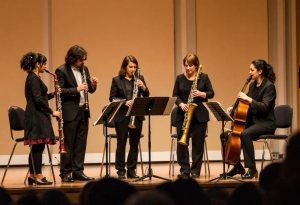
The woodwind quintet: it’s a chamber music staple! Think of it as a conversation between five distinct personalities – flute, oboe, clarinet, horn, and bassoon. And the flute? It’s not just the soprano. It’s so much more than just carrying the melody. Let’s dive into the flute’s world within the quintet. We’ll explore its unique role and how composers use its magic.
The Flute’s Voice: What It Can (and Can’t) Do
So, what makes the flute the flute? Its bright, clear sound, especially up high, lets it soar above the other instruments. Perfect for melodies! But here’s the thing: that brightness can also be a challenge. Composers have to be clever. They need to balance the flute’s sparkle with the warmer tones of its companions. Dynamics are key too. A super-soft flute sound that blends perfectly? That takes serious breath control. And going too loud? The flute can easily steal the show.
But wait, there’s more! The flute is agile. It can handle fast notes and fancy decorations with ease. Composers love this! They write dazzling, virtuosic passages. But, remember, speed isn’t everything. It’s not just about showing off. The flute’s brilliance has to serve the music.

Quintet Repertoire: A Quick Tour
Let’s look at some actual music. How have composers used the flute in quintets? Anton Reicha, a real pioneer, wrote a ton of quintets. He often gave the flute the main melodies. It’s lyrical and beautiful! But he also used the flute to add color and drive. Reicha’s writing demands both skill and teamwork.
Fast forward to the 20th century. Composers like Paul Hindemith and Carl Nielsen shake things up. Hindemith’s Kleine Kammermusik, Op. 24, No. 2? It’s neo-classical. Think angular melodies, complex rhythms, and counterpoint. The flute part is tough. You need a great ear and a strong sense of rhythm. Nielsen’s Quintet, Op. 43, is different. The flute feels more integrated. It’s like a playful conversation with the other instruments. The flutist needs to be flexible and responsive.
Flute Challenges: Technical and Musical
Playing flute in a woodwind quintet? It’s not a walk in the park. Intonation is everything. Flutes tend to go sharp up high and flat down low. You have to be on guard! Breath control is also vital. Long phrases? Fast passages? Big dynamic changes? All need excellent breath support. And articulation? It needs to be clear, precise, and musical. A staccato should be light, not harsh.
But it’s not just about technique. You need to understand the music. What was the composer trying to say? How can you bring that to life? Phrasing, dynamics, and tone color all matter. And you have to listen! A quintet is a conversation. The flutist has to be a good listener and a good communicator.
Blending In: Achieving Harmony
One of the biggest challenges? Blending with the other instruments. You have to match their tone, dynamics, and articulation. The flute’s bright sound can easily take over. So, you have to adjust. Maybe change your embouchure. Or try different fingerings. Or just play with a more relaxed sound.
You also need to know what the other instruments sound like. Playing with the oboe? Try to match its slightly nasal tone. Playing with the bassoon? Don’t drown out its low notes. Blending is a constant process of listening and adjusting.
More Than Just Notes: Expression and Interpretation
In the end, it’s about more than just playing the right notes. It’s about expression. The flutist has to bring the music to life. What’s the emotional content? What was the composer trying to say? You need to understand the composer’s style, the history of the piece, and the musical language. And you have to be willing to take risks and experiment.
The flute part in a woodwind quintet? It’s a rewarding challenge. It demands technique, sensitivity, and teamwork. Embrace those challenges and explore the flute’s potential. You can create a truly captivating experience.
The Future of the Flute in the Quintet
The woodwind quintet is still evolving. Composers are pushing boundaries. New works use extended techniques, electronics, and unusual instruments. This creates exciting opportunities for the flute. It can explore new sounds and territories! As the repertoire grows, the flute’s role will change. Performers will need to learn new techniques and interpretations. The future is bright! The flute will continue to contribute to this vibrant tradition.
Frequently Asked Questions
- What instruments are in a woodwind quintet? Flute, oboe, clarinet, horn, and bassoon.
- What’s hard about playing flute in a quintet? Intonation, breath control, blending, and complex passages.
- How important is teamwork? Crucial! Listen and respond to each other.
- What are some good quintet pieces for flutists? Reicha’s quintets, Hindemith’s Kleine Kammermusik, and Nielsen’s Quintet.
- How can I blend better? Experiment with embouchure, fingerings, and dynamics. Listen carefully!
The woodwind quintet: it’s a cornerstone of chamber music. But have you ever stopped to think about its story? It's Read more
