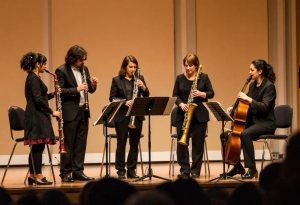
The woodwind quintet: flute, oboe, clarinet, bassoon… and the French horn. It’s a classic chamber ensemble. But why is the horn there? It seems a bit out of place, doesn’t it? A brass instrument among the woodwinds?
That’s precisely what makes it so special. The horn acts as a crucial bridge. It blends the distinct voices of the other instruments. It adds its own rich colors to the mix. Think of it as the glue that holds the whole thing together.
Blending Capabilities: The Horn as a Sonic Mediator
The horn’s secret weapon? Its tone. It’s not as bright or assertive as a trumpet. It’s mellower, rounder. This allows it to blend seamlessly with the woodwinds. No harshness. No clashes. Just pure harmony.
The conical bore and the player’s hand position are key. They create that warm, veiled sound. It’s a sonic bridge between the bright woodwinds and the dark bassoon. Blending isn’t just about softening the edges. It’s about creating a unified sound. Each voice contributes to a cohesive whole.
Take Carl Nielsen’s Wind Quintet, Op. 43. Listen to the beginning. The horn enters with a sustained, ethereal tone. It’s a gentle cushion for the oboe’s melody. It doesn’t dominate. It enhances the texture. It adds depth. This supportive role is vital. It allows the other instruments to shine, without sacrificing balance.

Melodic Contributions: Beyond the Oom-Pah
The horn isn’t just about harmonic support. It can also sing. Composers have long recognized its expressive potential. They write solos and melodic passages. They showcase its lyrical capabilities. Its wide range allows it to soar above the ensemble. Or weave intricate countermelodies.
A skilled composer knows how to use the horn’s voice. Consider the horn call in Ligeti’s Six Bagatelles. It’s brief. But it’s a moment of pure horn sound. It cuts through the complex textures. It adds a touch of rustic charm. And in Paul Taffanel’s Wind Quintet? The horn frequently takes the lead. It demonstrates its agility. Its expressive range.
Harmonic Support: The Foundation of the Ensemble
Maybe the most crucial role? Harmonic support. The horn plays sustained chords and arpeggios. It creates a solid foundation. The other instruments build upon it. Its tone fills out the texture. It doesn’t overpower. It adds depth and richness. This is especially important in a quintet. No cello or double bass. The horn provides that strong harmonic bedrock.
But it’s not just simple chords. The horn adds passing tones. Suspensions. Harmonic embellishments. They add color and interest. Its ability to blend creates subtle shifts. These enhance the emotional impact.
Orchestration and Instrument Interaction
The magic of a woodwind quintet lies in the orchestration. Composers understand the horn’s capabilities. Its ability to blend, to provide melody, to offer harmonic support… It allows for endless possibilities.
Composers use the horn to create contrasts. To build tension. To release it. To add color and depth. Think of it as a painter using different hues on a canvas. The horn is a key color in the palette.
The interaction is crucial. The horn must listen. It must adjust. It requires musical sensitivity. A willingness to compromise. When it works? A unified and compelling experience. Like a perfectly balanced meal, each ingredient complements the others.
The Horn’s Enduring Legacy in Chamber Music
The horn is indispensable. Its blending, its melodies, its harmonies… They all contribute. Its versatility has inspired composers for centuries. From Cambini to Ligeti, the horn shapes the sound of chamber music. It’s a legacy of beauty and innovation.
Ultimately, the horn is both a team player and a soloist. It blends seamlessly. It provides a solid foundation. But it also steps forward. It delivers moments of beauty. Of expressive power. This duality? It makes the horn fascinating. Rewarding. To listen to. To play.
Conclusion
The horn’s presence is more than just instrumentation. It’s a testament to its adaptability. To its ability to enrich the sound. Its blending, its melodies, its harmonies… They are essential. They achieve balance. Cohesion. Expressive depth. For musicians, educators, and enthusiasts? Understanding the horn unlocks a deeper appreciation. For the beauty of chamber music.
The woodwind quintet: it’s a cornerstone of chamber music. But have you ever stopped to think about its story? It's Read more
